Physical Address
304 North Cardinal St.
Dorchester Center, MA 02124
Physical Address
304 North Cardinal St.
Dorchester Center, MA 02124

The ground is rumbling, not from an earthquake, but from the earth-shattering news that a dedicated Godzilla Marvel crossover comic is officially launching this July. Titled “Godzilla Conquers the Multiverse,” this isn’t just a fleeting cameo; it’s a full-blown series promising to pit the King of the Monsters against iconic Marvel characters like Doctor Doom and Spider-Man. For fans of both titanic franchises, this revelation isn’t just exciting; it’s a seismic event, offering a fresh analytical lens through which to view the implications for storytelling, fan engagement, and the broader entertainment industry.
The concept of Godzilla rampaging through the Marvel Universe might sound like a fever dream, but it’s a dream long held by many. While Marvel Comics famously published its own “Godzilla, King of the Monsters” series in the late 1970s, featuring the kaiju squaring off against the Fantastic Four and the Avengers, this new iteration promises something far grander and more complex. The “multiverse” aspect immediately elevates the stakes, suggesting that this isn’t merely Godzilla appearing in Earth-616, but potentially traversing various Marvel realities, encountering different versions of heroes and villains. This approach allows for creative freedom, enabling writers to craft scenarios that respect the inherent power of Godzilla while still integrating him into the rich tapestry of Marvel lore without necessarily disrupting established continuity in the main universe.
Marvel’s history with giant monsters is almost as old as the publisher itself. Before superheroes dominated, titles like ‘Tales to Astonish’ and ‘Journey into Mystery’ were filled with colossal beasts. The original 1970s Godzilla Marvel crossover comic run, penned by Doug Moench and illustrated by Herb Trimpe, saw Godzilla inexplicably appear off the coast of Alaska and proceed to trek across the U.S., encountering S.H.I.E.L.D., the Champions, and even the Devil Dinosaur. That series established a precedent for integrating a truly world-altering force into a superhero narrative. However, “Godzilla Conquers the Multiverse” arrives in a vastly different era. The concept of the multiverse is now a mainstream phenomenon, deeply ingrained in both Marvel and DC narratives across comics, film, and television. This shift means the new series isn’t just about a monster attack; it’s about a force of nature disrupting the very fabric of alternate realities, offering a more profound and potentially more destructive narrative than its predecessor.
The analytical perspective here highlights how far comic book storytelling has evolved. The original series was largely a monster-of-the-week formula, with heroes attempting to stop Godzilla. The new series, by embracing the multiverse, suggests a more sophisticated narrative ambition. It implies that Godzilla’s presence could have ripple effects across multiple timelines, perhaps even altering the destinies of entire realities. This isn’t just about punching a giant lizard; it’s about understanding the cosmic implications of such a creature existing outside its own natural order, especially when it’s presumably “conquering” these multiverses.
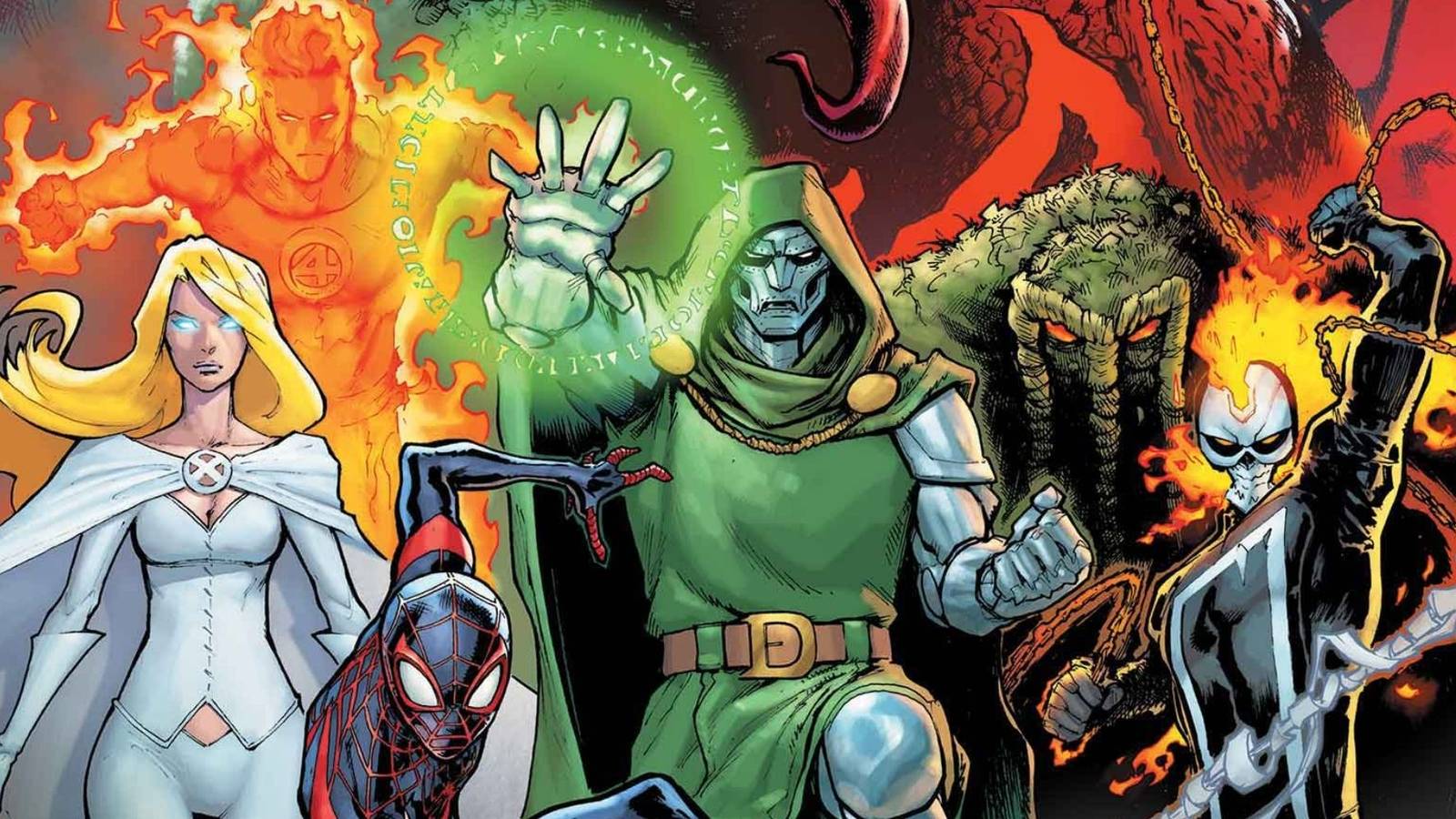
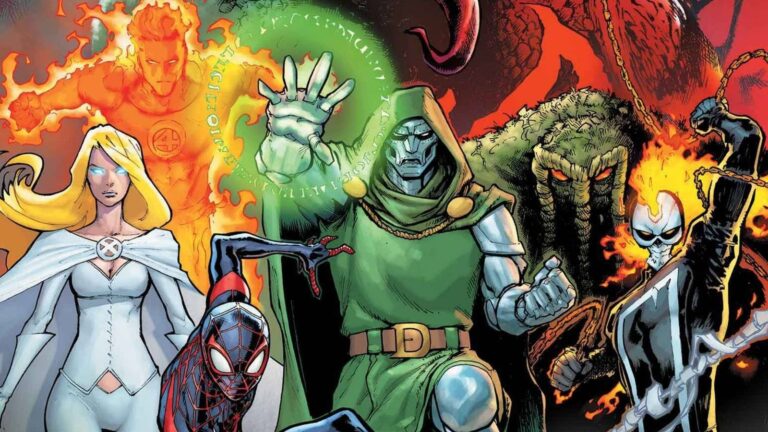
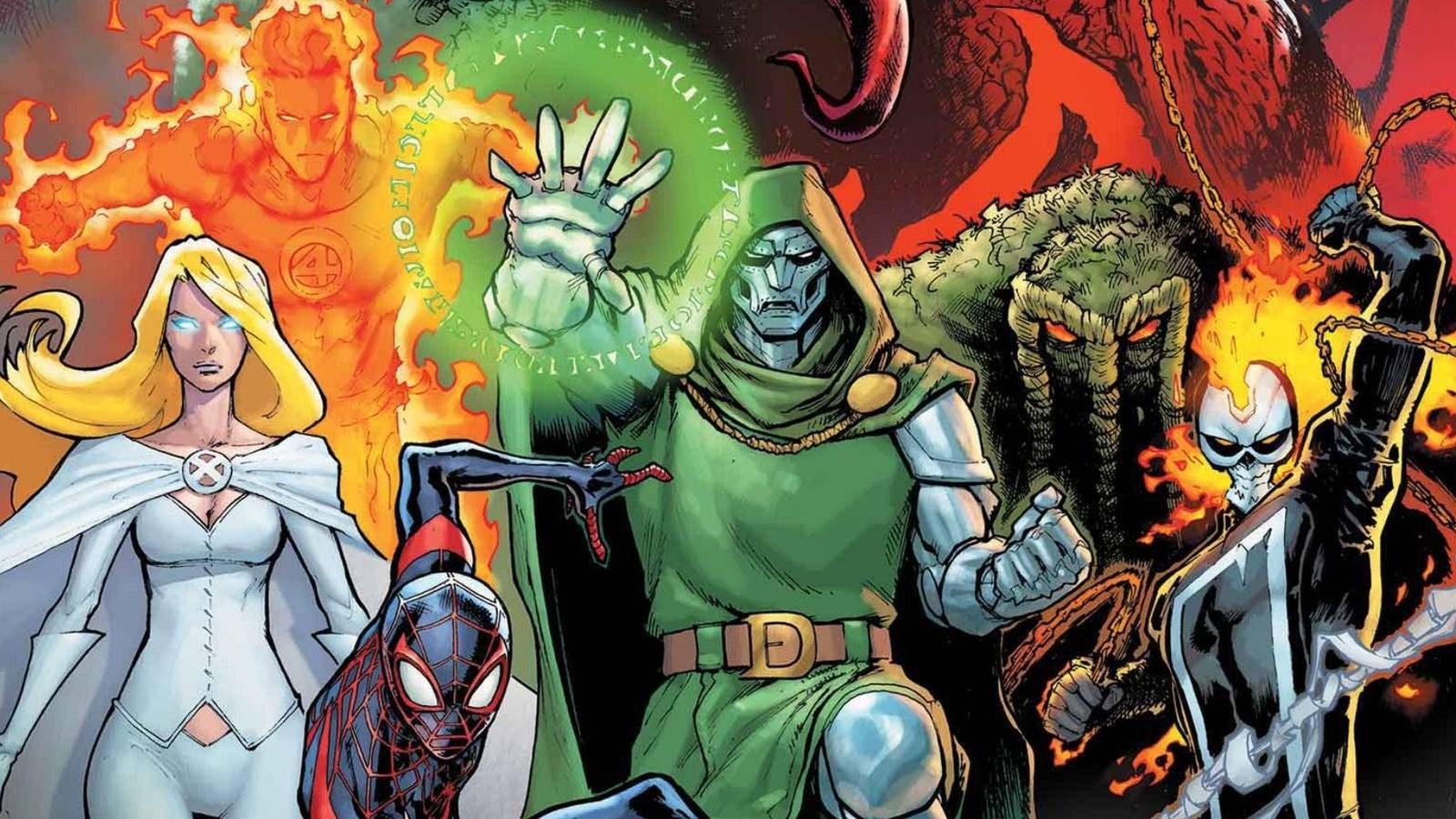
The announced encounters with Doctor Doom and Spider-Man are particularly intriguing. Doctor Doom, the monarch of Latveria and one of Marvel’s most formidable villains, operates on a global and often cosmic scale. His intellect, magic, and advanced technology make him a plausible contender for attempting to control or even weaponize Godzilla. A confrontation between Doom’s calculated villainy and Godzilla’s raw, untamed power could lead to truly spectacular and strategic battles. Imagine Doom’s force fields deflecting atomic breath or his doombots swarming the kaiju – the creative possibilities are immense for this Godzilla Marvel crossover comic.
Spider-Man, on the other hand, represents a different kind of challenge. A street-level hero, albeit one with superhuman strength and agility, Peter Parker’s encounters with Godzilla would likely be less about direct combat and more about urban survival, evacuation efforts, and perhaps even a scientific approach to understanding the creature. His perspective could offer a grounded, human element to the colossal chaos. The contrast between Doom’s grand schemes and Spider-Man’s personal struggle against the backdrop of Godzilla’s destruction promises a multifaceted narrative, appealing to different aspects of Marvel’s diverse readership. The core question becomes: how do these wildly disparate power levels and narrative tones coalesce into a cohesive, compelling story? This is where the true genius of a crossover lies – in making the impossible feel not just plausible, but inevitable.
The announcement of Godzilla Officially Crosses Into the Marvel Universe With Bonkers New Series [Exclusive] has sent shockwaves through both fan communities. Godzilla fans, accustomed to seeing their icon battle other kaiju or military forces, are eager to see how he measures up against a universe of superheroes and supervillains. Marvel fans, conversely, are curious to witness how their beloved characters react to a threat unlike any they’ve faced before – one that cannot be reasoned with, imprisoned, or easily defeated. The anticipation isn’t just for the spectacle; it’s for the character interactions, the unique challenges posed, and the potential for new lore. Will Godzilla be a mindless destructive force, or will there be nuanced motivations explored? The success of this Godzilla Marvel crossover comic hinges on its ability to satisfy these diverse expectations, delivering both epic destruction and compelling character moments. It’s a delicate balance that, if achieved, could cement this series as a legendary entry in both Godzilla and Marvel canons.
Beyond the immediate excitement, the “Godzilla Conquers the Multiverse” series carries significant industry implications. It underscores the continued dominance of the multiverse as a storytelling device, allowing creators to explore ‘what if’ scenarios without permanent repercussions on core continuities. More importantly, it highlights a growing trend of major intellectual properties (IPs) collaborating across company lines. In an increasingly competitive entertainment landscape, the merging of popular IPs like Godzilla and Marvel creates synergy, attracting broader audiences and generating immense buzz. This isn’t just about selling comics; it’s about leveraging the established appeal of two global brands to create a product that feels fresh and groundbreaking. This strategy could open doors for further collaborations, not just in comics but potentially across other media, like animation or even live-action adaptations, signaling a future where brand loyalty is increasingly fluid and crossover events become the norm rather than the exception. It’s a testament to the power of shared cultural touchstones.
The “Godzilla Conquers the Multiverse” series isn’t just a comic; it’s a statement. Its success or failure could dictate the future trajectory of such ambitious crossovers. If it resonates with fans and critics, we could see a new wave of Toho monsters entering the Marvel Multiverse, or even Marvel characters venturing into the Monsterverse. The analytical question then becomes: how deep can this integration go? Could Godzilla become a recurring, albeit disruptive, force in certain Marvel realities? Could this comic series, distinct from Legendary’s cinematic Monsterverse, influence future film decisions or inspire new animated projects? The potential is boundless. This Godzilla Marvel crossover comic could very well be the vanguard of a new era of inter-company storytelling, where the only limit is the imagination of the creators and the willingness of the studios to share their prized possessions for the sake of truly epic entertainment.
The new comic series, “Godzilla Conquers the Multiverse,” is officially set to launch in July.
Godzilla is confirmed to interact with iconic Marvel characters such as Doctor Doom and Spider-Man, among others as he traverses various multiverses.
No, Marvel Comics previously published a “Godzilla, King of the Monsters” series in the late 1970s, where he encountered various Marvel heroes. However, “Godzilla Conquers the Multiverse” is a new, distinct series utilizing the modern multiverse concept.
The key differentiator is the explicit use of the Marvel Multiverse, allowing Godzilla to interact with multiple realities and versions of characters, offering a broader scope and more complex narrative than previous single-universe crossovers.